
End-to-end IT solutions for healthcare organizations.
HIPAA-Compliant CRM in Healthcare: How to Choose One
Not every CRM can handle patient data legally. If your organization uses a CRM to manage patient relationships, referrals, outreach, or scheduling, that system must meet HIPAA requirements. Choosing the wrong platform doesn't just create compliance risk, it limits what your marketing and engagement team can actually do.


What makes a CRM HIPAA Compliant?
There is no such thing as a "HIPAA-certified" CRM. No government body certifies software for HIPAA compliance. Compliance depends on three things: the platform's technical capabilities, whether the vendor offers a Business Associate Agreement (BAA) you can execute, and how your organization configures and uses the system.

A HIPAA-compliant CRM must support these requirements:
The critical distinction that healthcare leaders understand:
A BAA covers the vendor's infrastructure. It does not cover how your team configures the CRM, who has access, or what data gets stored where. Configuration is where compliance actually lives.
Healthcare CRM Platforms That Support HIPAA Compliance


How to Evaluate a HIPAA-Compliant CRM for Your Organization
- Verify BAA
- Confirm Integration
- Check Safeguards
- Ensure Scalability
- Select a Partner
Does the BAA cover your use case?
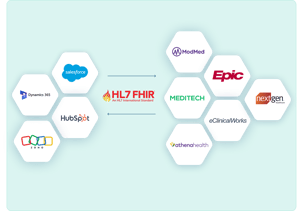
Can it integrate with your EHR?
Can you run marketing automation with PHI safeguards?
Will it scale?
Do you need an implementation partner?
Healthcare CRM Platforms That Support HIPAA Compliance


“Successful HIPAA‑compliant CRM implementation isn’t just about the technology; it’s about configuring it correctly and ensuring the client uses it responsibly. When those three elements work together, compliance becomes sustainable. Provisions Group excels because we understand the rules, the risks, and the real‑world workflows that keep organizations protected.”

Frequently Asked Questions
Salesforce Health Cloud supports HIPAA compliance, and Salesforce offers a standard BAA you can execute. However, HIPAA compliance depends on how the platform is configured: encryption settings, access controls, audit logging, and data handling policies must be implemented correctly. The platform provides the capability; your organization and implementation partner are responsible for the configuration.
A BAA (Business Associate Agreement) is a legal contract between your organization and a vendor that handles PHI. HIPAA certification does not exist. No government body certifies software as HIPAA-compliant. Compliance is determined by how the platform is configured and used, not by a certification stamp.
It depends on whether your current CRM supports a BAA, encryption, RBAC, and audit trails. If it does, it may be configurable for HIPAA compliance. If it doesn't, you need a platform that does. PG evaluates your current CRM as part of our assessment before recommending a platform change.

Ready to Choose the Right Healthcare CRM?
Choosing a HIPAA-compliant CRM is not a feature comparison exercise. It's a decision about compliance architecture, EHR integration, and how your organization engages patients across the full lifecycle. Getting it right requires healthcare-specific expertise.
Schedule a free CRM consultation with Provisions Group. We'll evaluate your current CRM environment, assess your HIPAA compliance posture, and recommend the right platform and configuration for your organization.

FEATURED SUCCESS STORY
How we streamlined lease management tools and cut support tickets by 75%.
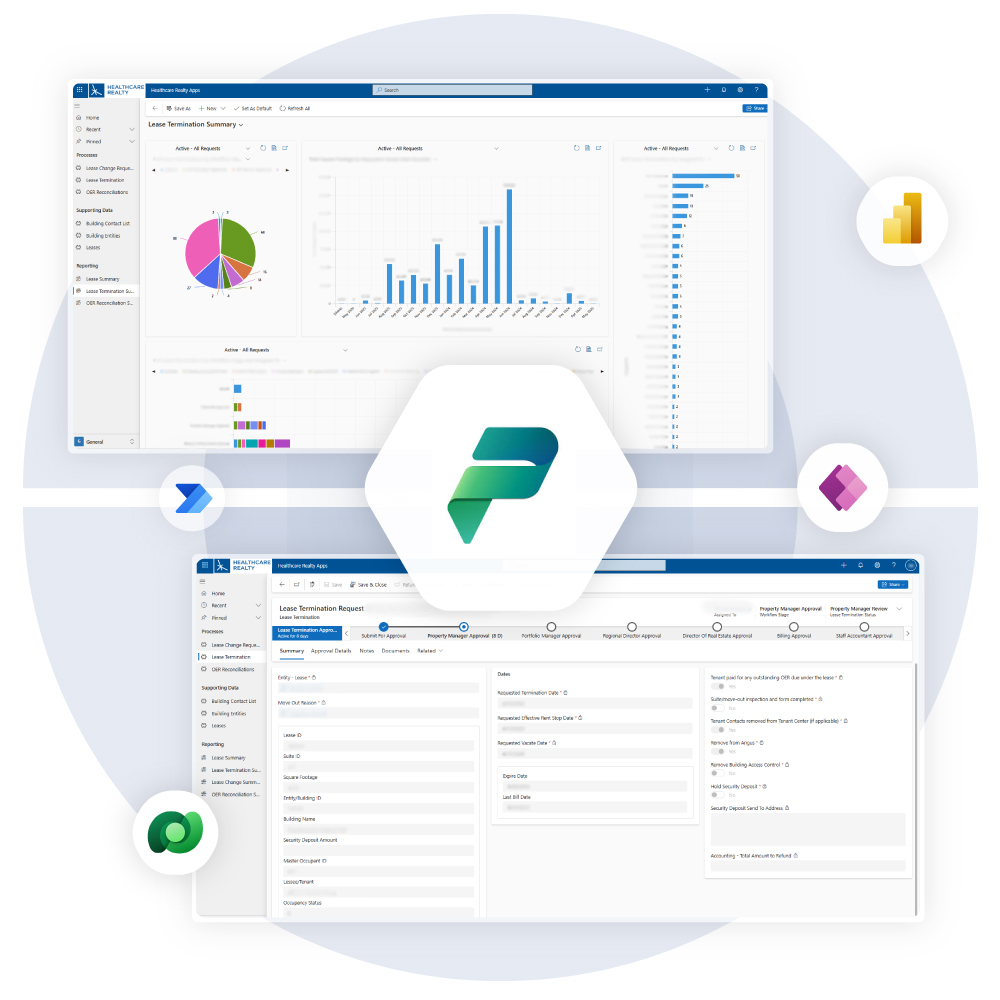
Healthcare Realty Trust, a publicly traded REIT specializing in outpatient medical facilities, partnered with Provisions Group to modernize their lease management processes. Using Microsoft Power Platform—including Power Apps, Power Automate, and Dataverse—we streamlined workflows, reduced support tickets by 75%, and improved cross-team collaboration across operations, leasing, and accounting.